





Many nonprofits rely on volunteers’ time and expertise to advance their missions, but trusting new people to liaise with clients, staff, or sensitive environments requires due diligence. Though verification protects your organization and the communities you serve, it may feel awkward, especially when screening longtime donors and supporters. It can also become an administrative burden for stretched-thin teams.
Volgistics has drawn on insights from nearly 5,000 client organizations and 6 million volunteers to develop volunteer management software that meets the challenges you face daily. These specialized tools remove the obstacles that traditionally accompany screening.
Using technology to handle the screening process is a win-win. It protects everyone involved while still preserving the warm, inclusive experience volunteers expect.
Why Should You Complete Volunteer Background Checks?
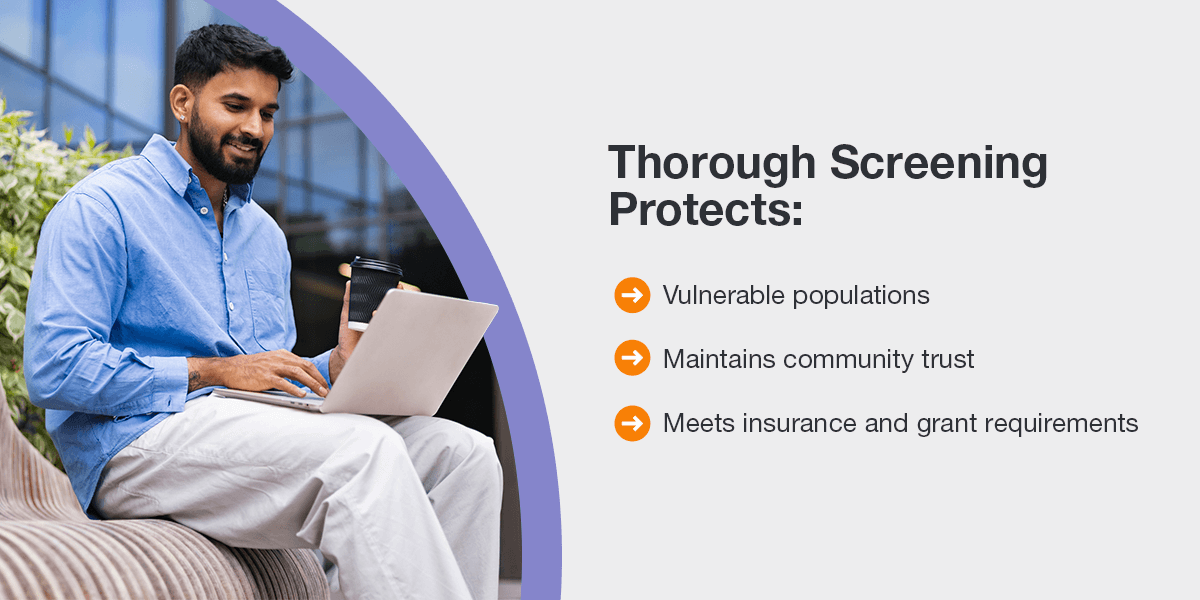
Thorough screening protects vulnerable populations, maintains community trust, and often meets insurance and grant requirements. The National Council of Nonprofits recognizes background checks as standard practice for risk management because the duty of care extends to everybody your volunteers interact with — staff, clients, and other volunteers.
Following volunteer organization best practices means integrating safety into your program from the start.
A Sector-Specific Volunteer Screening Guide
Various volunteer roles require different levels of screening. Matching your vetting approach to the responsibility level makes the process efficient and appropriate.
Youth Programs and Schools
A standard criminal history check often isn’t robust enough when working with minors. For example, if a volunteer has changed their name, a simple search might miss records filed under their previous name.
High-quality safety screening for youth roles should always include a Social Security number trace to reveal every name and address the volunteer has used in the past seven years across every county they have lived in.
Additionally, relying on a single-state repository leaves a safety gap. Best practices require a multijurisdictional search or a check of the National Sex Offender Public Website, which aggregates data from all 50 states, territories, and tribes. Finally, ensure your provider flags pending charges, not just convictions.
The Volunteers for Children Act allows nonprofit and for-profit organizations to access the FBI’s national criminal fingerprint database for background checks of volunteers and employees who work with children, the elderly, or people with disabilities.
Health Care and Hospice
Health care volunteer screening is subject to federal compliance. Facilities that receive Medicare or Medicaid funding may be subject to significant fines for working with unpaid volunteers who are on the Office of Inspector General Exclusion List for past fraud or abuse.
Though standard criminal checks do not catch this, running an OIG and General Services Administration sanction check can protect your organization’s funding status.
Health care screening has medical and legal aspects. Volunteers often require TB tests, flu shots, and vaccination records before they can interact with patients. Volgistics is a powerful ally. The Checklist feature lets you track expiration dates for criminal checks and medical requirements in a single profile. The volunteer can get automated alerts when a compliance item on the checklist is about to expire.
Churches and Faith-Based Groups
Safety screening within a faith community is an act of stewardship. Follow the six-month rule — a volunteer must be a regular attendee for at least six months before they can work with children. This buffer period gives leadership time to observe the person’s character in a lower-risk setting first.
You can neutralize personal offense by making safety a collective standard for the community. Announce a universal refresh in which everyone, from the senior pastor to nursery workers, undergoes a new check.
Finally, remind your team that background checks are only one layer of defense. You should pair them with the two-adult rule, which requires that no adult is ever alone with a child. The goal is to protect volunteers from false accusations as much as you protect children in your care.
Environmental and Animal Welfare
Animal welfare and environmental conservation volunteers should also undergo more stringent vetting than standard background checks and criminal reports. That’s because many states list animal cruelty charges generically as misdemeanors instead of itemizing them.
Make sure your volunteer screening provider specifically flags animal-related offenses or checks state-specific animal abuse registries —available in states like Tennessee, Illinois, and New York — to prevent placing an animal in unsafe hands.
Additionally, these responsibilities often involve transportation, whether driving a rescue van or transporting pets to a park in a personal vehicle. Volgistics allows you to upload and track driver’s license expiration dates and insurance proofs alongside background check results. Keeping all your transport compliance data in one secure, accessible tab ensures every volunteer is valid, insured, and safe.
Implementing Screening That Welcomes Volunteers
Professional screening processes become seamless when you thoughtfully build them into your volunteer program.
Set Expectations Early
Include your screening policy in volunteer applications and job descriptions from the start and frame it clearly. For example, “We screen all volunteers to keep you, our community, and those we serve safe.”
Most candidates appreciate organizations that prioritize safety screening. Communication removes uncertainty and sets professional expectations from the first interaction.
Integrate Technology Solutions
Technology streamlines formerly complex processes. Volgistics’ partnership with Verified First allows managers to order volunteer background checks directly from a volunteer’s profile with one click. The integration eliminates separate forms, reduces data entry errors, and removes the need to store sensitive information, such as Social Security numbers, in unsecured spreadsheets.
The system securely handles data and delivers results directly to the volunteer’s profile. Coordinators can see screening status at a glance and track when re-screening is due. For volunteers, screening becomes a natural part of onboarding rather than a separate hurdle. They receive understandable instructions, can complete required steps online, and know where they are at every point along the way.
Address Cost Considerations
Volunteer background checks vary based on screening depth. Some organizations absorb the cost as part of their volunteer program budget, treating it as an investment in program safety. Others offer volunteers the option to cover the fee as a donation to the organization. Some platforms build this choice into the application process, giving volunteers control over how they contribute.
No matter how you decide to handle it, it’s wise to implement a policy up front so everyone understands expectations. Include cost information in your volunteer recruitment materials to avoid surprises during onboarding.
Creating an Effective Screening Timeline
Strategic timing makes screening cost-effective and thorough. Three moments are critical here.
- The conditional offer: Screening after the interview or orientation when you’ve extended a conditional offer, but before the volunteer’s first shift or unsupervised access, complies with the Fair Credit Reporting Act and focuses resources on candidates who are moving forward. Volunteers appreciate knowing they’re a good fit for your program before investing in the screening process. In turn, your organization avoids spending money screening candidates who may change their mind about participating.
- Building in ongoing verification: Many organizations screen every two to three years. Some use continuous monitoring services that provide alerts about new activity. This approach is particularly valuable for volunteers working with vulnerable populations or those with facility and information access. It demonstrates an ongoing commitment to safety and ensures your records reflect current circumstances.
- Handling returning volunteers: Volunteers returning after extended absences benefit from a refresher screening as part of their reactivation process. Update their information, review policy changes since they last volunteered, and complete a new background check.
Making Safety a Pillar of Your Volunteer Culture
Effectivescreening builds the foundation of safe, thriving communities. Background checks are vital because they protect volunteers, staff, vulnerable populations, and your mission. Efficient, respectful screening strengthens rather than complicates the volunteer experience.
Volgistics helps organizations of all sizes manage this process simply and securely. Through a partnership with Verified First, the platform streamlines background screening directly within volunteer profiles, eliminating the need for separate paperwork and reducing administrative complexity.
A 30-day free trial allows volunteer program leaders to explore how integrated screening, combined with robust volunteer management tools, creates safer programs without sacrificing the welcoming experience volunteers deserve.