




Food banks are managing unprecedented demand in 2026. Food insecurity rose to 16% in November 2025, federal nutrition assistance has been reduced, and donations are unpredictable. Meeting this moment requires volunteers — individuals who care deeply enough to donate their time to feed families. These community members are essential to operations, from sorting food to coordinating deliveries. The key is channeling their efforts efficiently.
Volunteer management tools make this possible. The right technology maximizes every volunteer hour, coordinates multiple locations, and maintains compliance without bottlenecks. With strong systems in place, food bank volunteer management becomes a strategic advantage — turning limited resources into expanded capacity.
How Technology Empowers Food Bank Leaders
The food bank environment calls for innovative approaches to volunteer coordination. Advanced volunteer management technology offers capabilities that paper systems and manual tracking cannot provide.
Volgistics’ customizable platform delivers real-time insights, automated communication, and smooth workflows that empower food banks to serve more people with greater efficiency.
Adapts to Dynamic Conditions
Volunteer management platforms provide the flexibility food banks need to respond to changing conditions. Uncertainties around federal food sources and changing Supplemental Nutrition Assistance Program (SNAP) eligibility create new operational challenges.
Digital systems allow organizations to quickly adjust schedules, communicate changes instantly, and reallocate resources across programs — capabilities that keep operations running smoothly regardless of external pressures.
Reclaims Time for Mission-Critical Work
The affordability crisis facing people nationwide underscores the importance of maximizing operational efficiency. They can focus on donor relations, food sourcing, community partnerships, and strategic planning. The days of managing spreadsheets or making dozens of reminder calls have passed.
Volgistics food bank volunteer management software handles scheduling, tracking, and communication. Managers can redirect energy toward mission-critical activities.
Maximizes Volunteer Impact Through Strategic Coordination
Donated service represents a scalable resource that grows with demand. Volunteer management systems for food banks treat coordination as a strategic function, using data to optimize assignments, track skills, and measure impact. The right platform turns volunteer programs from administrative tasks into strategic assets that expand service capacity.
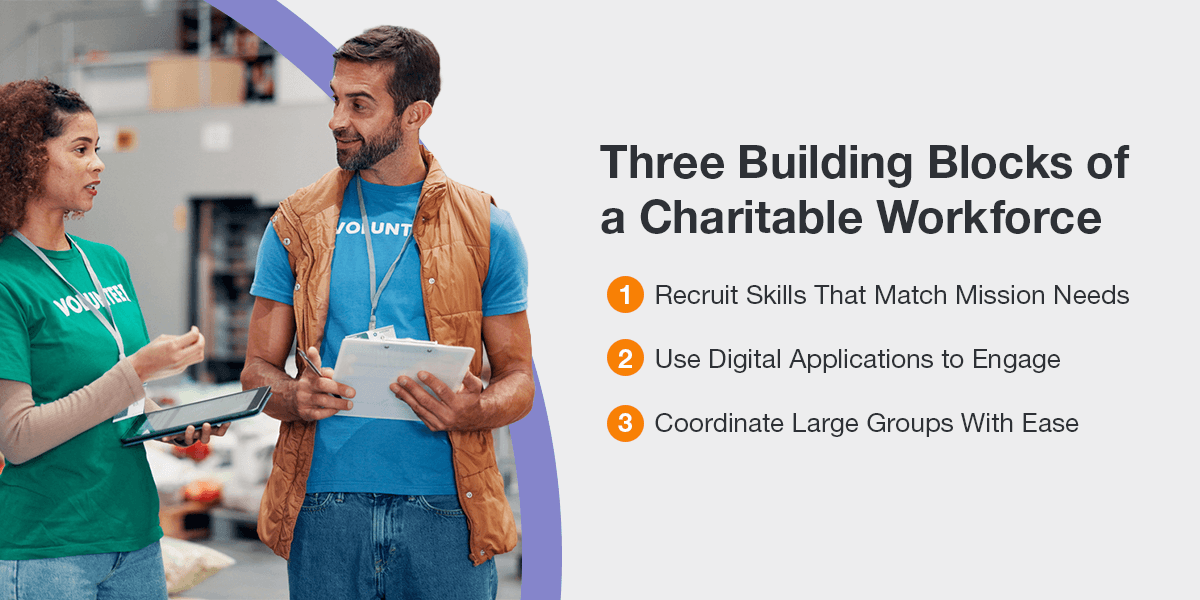
Three Building Blocks of a Charitable Workforce
Strong programs start with recruitment that targets specific skills and creates frictionless pathways to participation.
1. Recruit Skills That Match Mission Needs
Food banks benefit from volunteers who can drive delivery vehicles, handle warehouse logistics, or provide compassionate client services. Digital recruitment tools allow organizations to create targeted campaigns for specific skill sets.
In 2025, Maine food pantries faced voluntary worker shortages as a result of demographic shifts. Technology-enabled recruitment widens reach beyond traditional channels. Organizations can easily connect with corporate partners, community groups, and individuals whose skills match their operational needs.
Volgistics makes this process easy with features like online opportunity directories that integrate with your website. Organizations can showcase specific roles — complete with job descriptions, task requirements, and time commitments — allowing potential volunteers to find opportunities that match their skills and availability.
Online application forms feed directly into the database, eliminating manual data entry and speeding up the onboarding process. And when it’s time for background screening, Volgistics’ partnership with Verified First simplifies this critical but time-consuming step.
2. Use Digital Applications to Engage
Building long-term engagement keeps your volunteers active and committed. A strong volunteer engagement strategy converts one-time participants into dedicated team members who understand your mission and care deeply.
Sending the right message to the right person builds connection and improves response rates. Volgistics’ text and email capabilities allow food banks to organize messages by schedule, assignment, location, skills, or availability. And volunteers receive only the information relevant to them.
This targeted approach prevents message fatigue, and when communication feels personalized and purposeful, your volunteers stay engaged.
Real-time messaging also handles schedule changes efficiently. If a shift needs additional coverage, automated text and email alerts reach qualified backup volunteers instantly. They can respond and fill slots in minutes. Operations run smoothly even when circumstances change.
3. Coordinate Large Groups With Ease
Corporate volunteer events and community group projects bring valuable capacity to food banks. Volgistics’ group volunteer tracking treats groups as separate entities from individual volunteers. This important distinction protects group member privacy and respects how teams prefer to serve collectively.
When managing groups, coordinators create a single group record that represents the entire team rather than tracking each member individually. This approach addresses practical concerns. Groups may not want to share member information, and team members typically volunteer as a unit rather than taking individual assignments.
Coordinators can schedule entire groups in a single step, noting how many members will participate without needing personal details for each person. The system allows groups and individuals to appear on the same schedules with distinct visual markers. What once involved hours of back-and-forth communication now happens efficiently through a single process.
Maximizing Every Hour
It’s frustrating having too many volunteers at a given time and too few at another. Smart scheduling technology means the right number of volunteers show up for every shift.
Automated Shift Management
Volunteer scheduling software takes the guesswork out of staffing. Coordinators can set capacity limits and minimum coverage requirements for each shift, so volunteers can see exactly how many spots remain available. This ability prevents the awkward situation of too many people showing up or the stress of coverage gaps.
Managers can schedule volunteers for regular intervals — every Monday, alternate Saturdays, first and third Thursdays, or any custom pattern that fits operational needs. Creating openings in advance allows participants to sign up as their schedules allow, and coordinators can see at a glance which shifts still need coverage.
Viewing and printing schedules is flexible, too. Coordinators can pull up monthly, weekly, or daily views and filter by specific volunteers, locations, assignments, or teams. If someone needs to substitute for another, the system tracks both names — showing who was originally scheduled and who stepped in to cover.
Self-Service Scheduling Respects Volunteer Autonomy
Web and mobile portals help food bank volunteers manage their own schedules. Using tools like Volgistics VicNet online portal, volunteers can view available opportunities, sign up for shifts that fit their availability, and make changes when needed — without requiring coordinator intervention.
VicTouch provides time clock functionality for volunteers who prefer to sign in and out at kiosks. This autonomy increases satisfaction and participation while reducing administrative workload.
Coordinating Across Multiple Locations
Food banks operating warehouses, satellite pantries, and mobile units need centralized systems that maintain consistency while allowing location-specific flexibility.
- Unified data across operations: Multi-site food bank volunteer management software creates a single database accessible across all locations. Volunteer records, training certifications, scheduling preferences, and service history travel with each volunteer regardless of where they serve.
- Standardized training and communication: A centralized system delivers consistent onboarding experiences and training materials at all locations. Every volunteer gets the same safety information, mission overview, and operational protocols, whether they serve at the main warehouse or a neighborhood pantry.
- Real-time impact reporting: Digital platforms automatically aggregate data from all sites, giving instant visibility into volunteer hours, service metrics, and operational efficiency. Reports show impact across all locations combined or broken down by individual sites. Information is readily available when donors request impact reports or grant application documentation is required. This transparency strengthens relationships with funders and demonstrates organizational effectiveness.
Protecting Your Mission Through Digital Compliance
A digital document storage feature keeps liability waivers, emergency contacts, and skills certifications organized and instantly accessible. When volunteers complete paperwork electronically, it is automatically added to their profiles.
Compliance extends to how organizations communicate with volunteers. Professional platforms provide secure channels for coordination. This tracking creates transparency and accountability while protecting participants’ privacy — a significant improvement over personal cell phones and informal messaging apps that leave no audit trail.
Digital systems maintain records of hours, services provided, training completion, and document expiration dates. For audits or grant applications, coordinators can generate complete reports with a few clicks. This preparedness demonstrates organizational professionalism to funders and oversight bodies.
Volunteer Management Technology Creates Lasting Impact
Food banks face a defining moment in 2026, and volunteers across the country are showing up to meet it. The question is how to equip them with systems that transform dedication into measurable results.
Volgistics food bank volunteer management solutions are purpose-built for this challenge. Our platform is continuously refined through lessons learned implementing volunteer software for 4,000+ organizations.
Our 30-day free trial is a great way to explore how Volgistics empowers teams to focus on what matters most — feeding families and strengthening communities.