




The motivations and behaviors of volunteers are constantly shifting, and reliable volunteer data is essential to know where to focus your efforts. To help you plan with confidence, we’ve analyzed current research to bring you nine key statistics and trends shaping the volunteer landscape in 2026.
Making sense of these changes is crucial, and it’s the kind of challenge Volgistics has been helping organizations solve for more than two decades. This article provides the forward-looking insights you need, while volunteer management software gives you the practical tools to streamline your recruitment, improve engagement, and prove your program’s undeniable impact.
The Big Picture in Numbers
The volunteer statistics emerging from recent years tell a story of recovery and transformation. After the pandemic disrupted formal volunteering, rates have rebounded significantly — but the nature of that participation looks different than it did before 2020.
1. More Volunteers Are Returning to Service
Formal volunteering has made an impressive comeback. The formal volunteering rate jumped from 23.2% in 2021 to 28.3% in 2023, marking the fastest two-year growth on record. Over 75.7 million Americans formally volunteered between September 2022 and September 2023, demonstrating that the desire to serve remains strong nationwide.
The rebound is encouraging, but volunteer facts tell a more complex story. Participation rates haven’t fully returned to pre-2019 levels. This creates an opportunity and a challenge for volunteer managers. The opportunity lies in a growing pool of interested individuals. The challenge is converting that interest into sustained engagement within formal programs that can track and maximize their contributions.
2. The Value of an Hour Is Worth More Than Ever
Understanding the economic impact of volunteer service has never been more important for securing funding and board support. The latest estimated national value of a volunteer hour is $36.14, based on 2025 data released in April 2026. When applied across all formal volunteering, total volunteer hours contributed an estimated $167.2 billion in economic value.
This volunteering statistic is a powerful tool for grant proposals, annual reports, and stakeholder presentations. When you can demonstrate that 1,000 volunteer hours represents over $36,000 in value, you transform abstract service into concrete impact. Volgistics’ volunteer reporting tools accurately track these hours and generate the documentation needed to make compelling cases for program support.
3. What the Growth in Neighborly Helping Means for Formal Programs
One of the most striking facts about volunteering is the surge in informal help. Between 2022 and 2023, 54.2% of Americans informally helped neighbors, up from 51.7% in 2019. This shift reveals something crucial about public motivation: people want low-friction, flexible, and direct ways to help.
Volunteer leaders can view this as a window into what attracts participants, especially as the field grows to acknowledge diverse ways people choose to give back.
Formal programs that can simplify their processes, reduce barriers to entry, and offer immediate impact are better positioned to compete for attention. The lesson is clear — convenience and flexibility are expectations that shape whether someone chooses to volunteer through an organization or simply help a neighbor instead.
Who Is Answering the Call to Serve
Understanding volunteer demographics helps organizations target recruitment efforts and design programs that resonate with different groups. The data shows significant variations in participation rates across generations, genders, and education levels — insights that can inform everything from messaging to scheduling.
4. Generation Z and Millennials Are Stepping Up
While Generation X maintains the highest rate of formal volunteering, Gen Z and Millennials represent a rising force in the volunteer workforce. Around 24.5% of Gen Zers and 29.4% of Millennials report volunteering for nonprofits, and their motivations differ from those of previous generations in clear ways:
- 93% want tangible community impact
- They seek flexible options like micro-volunteering and skill-based opportunities
- They value experiences that support social connections and career growth
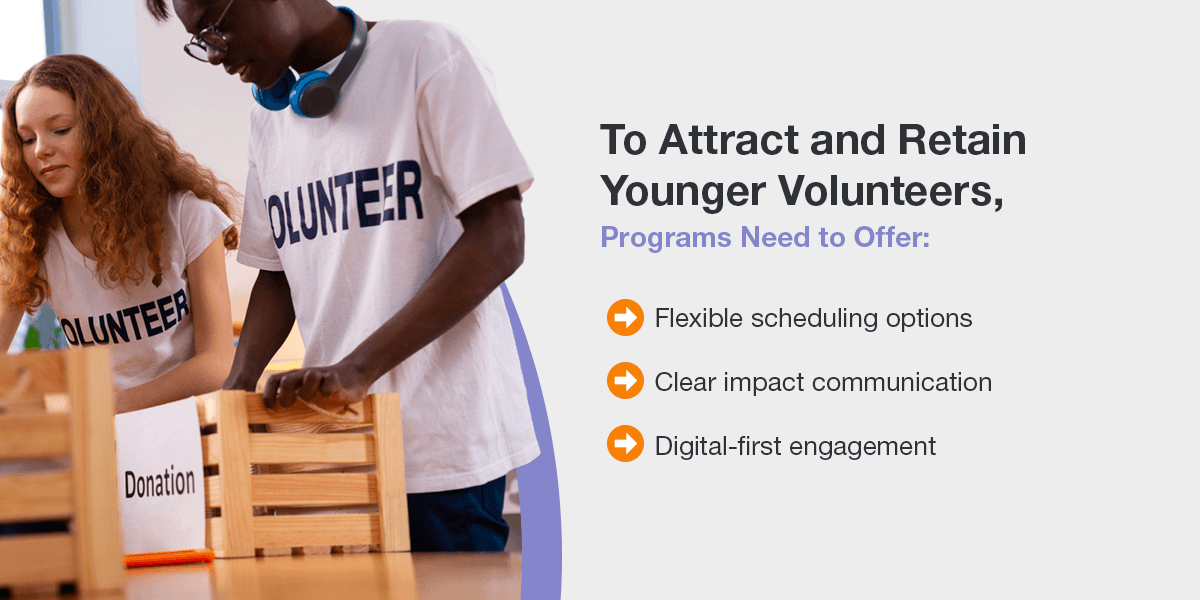
These facts about volunteering demographics have practical implications. To attract and retain younger volunteers, programs need to offer:
- Flexible scheduling options: Younger volunteers often juggle multiple commitments and prefer assignments that fit varied schedules rather than fixed weekly time slots.
- Clear impact communication: Gen Z and Millennials want to understand how their contributions connect to measurable outcomes and the organization’s mission.
- Digital-first engagement: From application to communication, younger volunteers expect streamlined digital experiences that respect their time.
Organizations looking to recruit and engage Millennial volunteers should consider how their processes accommodate these preferences.
5. The Profile of the Modern Volunteer Is Changing
Beyond generational differences, other demographic patterns offer strategic guidance. Women formally volunteer at higher rates than men, 30.9% versus 25.6%. Education level also correlates strongly with participation — those with graduate degrees volunteer at a 48.8% rate, while those with bachelor’s degrees volunteer at 38%.
Where should you focus recruitment energy? These volunteer demographics point to specific populations. Professional networks, alumni associations, and graduate program partnerships can connect you with groups statistically more likely to volunteer.
Using Volgistics volunteer recruiting tools to target professional networks, alumni associations, and graduate programs enables organizations to connect with groups that participate at higher rates rather than casting wide nets.
How Your Program Needs to Evolve
These volunteering facts point to clear shifts in how people want to serve. Programs that adapt will find it easier to recruit, retain, and maximize volunteer contributions. The following four trends represent the most significant changes volunteer managers can address in their strategic planning.
6. Corporate Partnerships Are Essential
Corporate volunteerism has exploded, with one survey showing 77% of companies reported increased workplace volunteering. Organizations gain access to skilled volunteers, potential funding through volunteer grants, and opportunities for long-term partnerships that go beyond one-time events.
The value extends beyond raw hours. Corporate volunteers often bring professional expertise — marketing, finance, technology — that small volunteer-driven teams would otherwise struggle to access. Building relationships with companies in your area creates pipelines for volunteers and resources.
7. Remote and Hybrid Options Are Expected
Virtual volunteering has moved from pandemic necessity to permanent expectation. During that same period from 2022 to 2023, 18% of formal volunteers served completely or partially online. Virtual and hybrid volunteers contributed more than 1.2 billion hours of service, showing that remote opportunities represent a significant portion of the volunteer landscape.
Offering remote roles expands your recruitment pool beyond geographic boundaries and accommodates volunteers with mobility limitations, caregiving responsibilities, or scheduling constraints. Organizations managing volunteers across different locations need systems that can coordinate both in-person and virtual participants seamlessly.
8. Short Gigs and Pro Bono Work Are In
Episodic volunteering — short-term, project-based assignments — continues to grow in popularity. Volunteers increasingly prefer well-defined, time-limited projects over long-term, routine commitments. The reasons are clear: people’s relationship with work and time management is fundamentally changing.
The implication for volunteer managers is significant. Programs need to create opportunities that can be completed in hours or days. Skills-based volunteering, where professionals contribute specific expertise to discrete projects, satisfies the volunteer’s desire for meaningful contribution and the organization’s need for specialized help.
Software that enables flexible scheduling for varied commitments is essential for efficiently managing these short-term assignments.
9. Keeping Volunteers Engaged Is Getting Harder
Volunteers now represent 16% of the national nonprofit workforce, down from 26% a decade ago. The numbers reveal a retention challenge — while more people are volunteering, the average hours per volunteer are dropping.
Retention requires consistent communication, clear demonstration of impact, and recognition of contributions. Volunteers who understand how their work advances the mission and who feel connected to the organization are more likely to continue serving.
Volgistics’ text and email communication features allow volunteer leaders to stay connected with their volunteers between service opportunities, share impact updates, and send reminders that strengthen ongoing commitment.
Turn These Trends Into an Advantage With Volgistics
The right tools can help organizations turn these trends into opportunities. For over 20 years, Volgistics has helped volunteer leaders simplify program management through features designed to address today’s challenges — from detailed reporting that captures volunteer value to flexible scheduling that accommodates modern expectations to communication tools that keep volunteers engaged.
Start a free 30-day trial to experience the system firsthand, or schedule a live demonstration to see how the platform supports strategic decision-making. Discover how Volgistics can help turn volunteer data into action.